
 Posts
Posts


1 Corinthians Chapter 10 (RSV) Saint John Chrysostom, Bishop of Constantinople (A.D. 347-407) Saint Ambrose, Bishop of Milan (A.D. ~387)
1 I want you to know, brethren, that our fathers were all under the cloud, and all passed through the sea, 2 and all were baptized into Moses in the cloud and in the sea, 3 and all ate the same supernatural food 4 and all drank the same supernatural drink. For they drank from the supernatural Rock which followed them, and the Rock was Christ. 5 Nevertheless with most of them God was not pleased; for they were overthrown in the wilderness.
6 Now these things are warnings for us, not to desire evil as they did. 7 Do not be idolaters as some of them were; as it is written, "The people sat down to eat and drink and rose up to dance." 8 We must not indulge in immorality as some of them did, and twenty-three thousand fell in a single day. 9 We must not put the Lord to the test, as some of them did and were destroyed by serpents; 10 nor grumble, as some of them did and were destroyed by the Destroyer. 11 Now these things happened to them as a warning, but they were written down for our instruction, upon whom the end of the ages has come. 12 Therefore let any one who thinks that he stands take heed lest he fall. 13 No temptation has overtaken you that is not common to man. God is faithful, and he will not let you be tempted beyond your strength, but with the temptation will also provide the way of escape, that you may be able to endure it. 14 Therefore, my beloved, shun the worship of idols.
15 I speak as to sensible men; judge for yourselves what I say. 16 The cup of blessing which we bless, is it not a participation in the blood of Christ? The bread which we break, is it not a participation in the body of Christ? 
17 Because there is one bread, we who are many are one body, for we all partake of the one bread. 18 Consider the people of Israel; are not those who eat the sacrifices partners in the altar? 19 What do I imply then? That food offered to idols is anything, or that an idol is anything? 20 No, I imply that what pagans sacrifice they offer to demons and not to God. I do not want you to be partners with demons. 21 You cannot drink the cup of the Lord and the cup of demons. You cannot partake of the table of the Lord and the table of demons. 22 Shall we provoke the Lord to jealousy? Are we stronger than he?
23 "All things are lawful," but not all things are helpful. "All things are lawful," but not all things build up. 24 Let no one seek his own good, but the good of his neighbor. 25 Eat whatever is sold in the meat market without raising any question on the ground of conscience. 26 For "the earth is the Lord's, and everything in it." 27 If one of the unbelievers invites you to dinner and you are disposed to go, eat whatever is set before you without raising any question on the ground of conscience. 28 (But if some one says to you, "This has been offered in sacrifice," then out of consideration for the man who informed you, and for conscience' sake-- 29 I mean his conscience, not yours--do not eat it.) For why should my liberty be determined by another man's scruples? 30 If I partake with thankfulness, why am I denounced because of that for which I give thanks? 31 So, whether you eat or drink, or whatever you do, do all to the glory of God. 32 Give no offense to Jews or to Greeks or to the church of God, 33 just as I try to please all men in everything I do, not seeking my own advantage, but that of many, that they may be saved.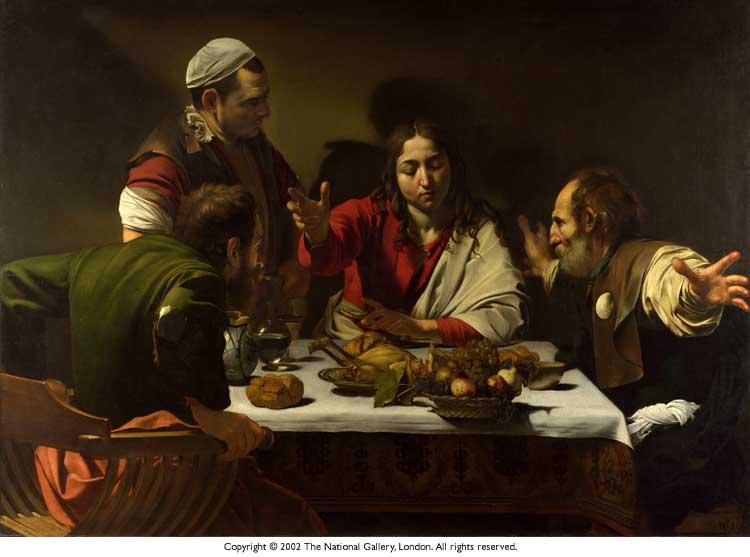
"Perceivest thou the wisdom of Paul, how in both cases he points out Him as the Giver, and thereby brings the Type nigh to the Truth? 'For He who set those things before them,' saith he, 'the same also hath prepared this our Table: and the same Person both brought them through the sea and thee through Baptism; and before them set manna, but before thee His Body and Blood.'"
Homily XXIII on First Corinthians
http://www.ccel.org/fathers2/NPNF1-12/TOC.htm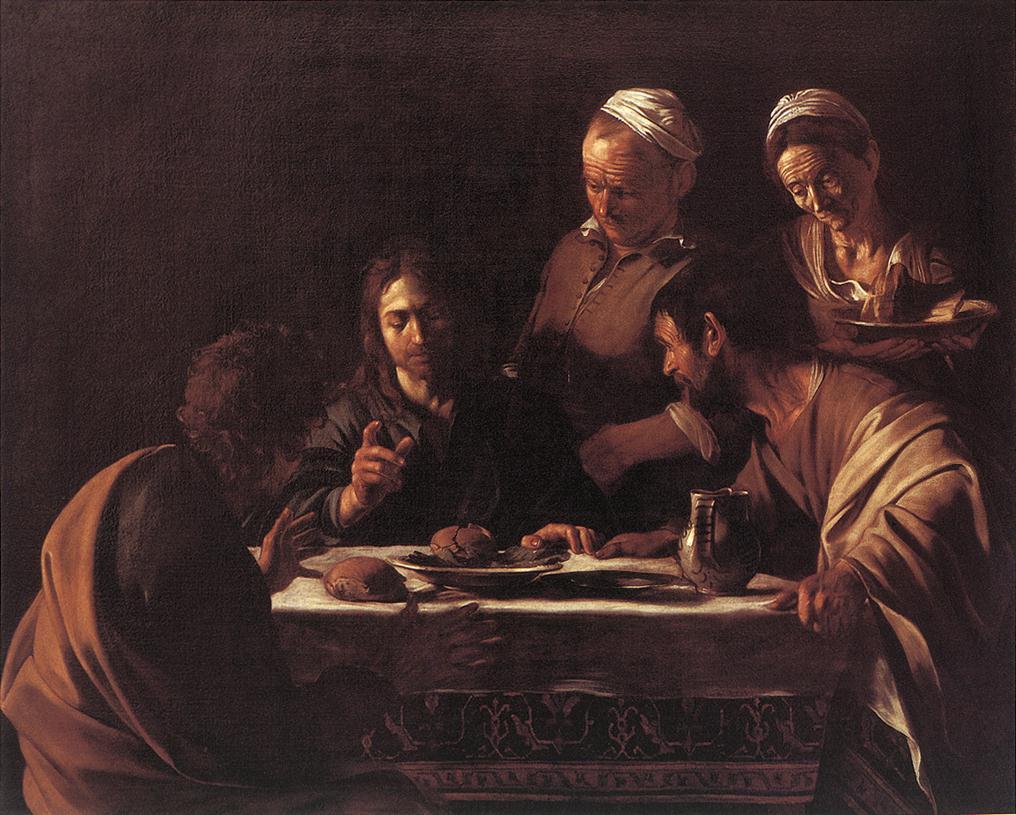
"In very truth it is a marvellous thing that God rained manna on the fathers, and fed them with daily food from heaven; so that it is said, "So man did eat angels' food." But yet all those who ate that food died in the wilderness, but that food which you receive, that living Bread which came down from heaven, furnishes the substance of eternal life; and whosoever shall eat of this Bread shall never die, and it is the Body of Christ."
"Now consider whether the bread of angels be more excellent or the Flesh of Christ, which is indeed the body of life. That manna came from heaven, this is above the heavens; that was of heaven, this is of the Lord of the heavens; that was liable to corruption, if kept a second day, this is far from all corruption, for whosoever shall taste it wholly shall not be able to feel corruption. For them water flowed from the rock, for you Blood flowed from Christ; water satisfied them for a time, the Blood satiates you for eternity. The Jew drinks and thirsts again, you after drinking will be beyond the power of thirsting; that was in a shadow, this is in truth."
"If that which you so wonder at is but shadow, how great must that be whose very shadow you wonder at. See now what happened in the case of the fathers was shadow: "They drank, it is said, of that Rock that followed them, and that Rock was Christ. But with many of them God was not well pleased, for they were overthrown in the wilderness. Now these things were done in a figure concerning us." You recognize now which are the more excellent, for light is better than shadow, truth than a figure, the Body of its Giver than the manna from heaven. "
Treatise on the Mysteries, 47-49
http://www.newadvent.org/fathers/3405.htm
Monday, October 17, 2005
1 Corinthians 10: A Communion with the Blood of Christ

Monday, September 19, 2005
John 3:15: A serpent, a Savior, a sacrament
4 From Mount Hor they set out by the way to the Red Sea, to go around the land of Edom; and the people became impatient on the way. 5 And the people spoke against God and against Moses, "Why have you brought us up out of Egypt to die in the wilderness? For there is no food and no water, and we loathe this worthless food." 6 Then the LORD sent fiery serpents among the people, and they bit the people, so that many people of Israel died. 7 And the people came to Moses, and said, "We have sinned, for we have spoken against the LORD and against you; pray to the LORD, that he take away the serpents from us." So Moses prayed for the people. 8 And the LORD said to Moses, "Make a fiery serpent, and set it on a pole; and every one who is bitten, when he sees it, shall live." 9 So Moses made a bronze serpent, and set it on a pole; and if a serpent bit any man, he would look at the bronze serpent and live.Numbers 21:4-9
14 And as Moses lifted up the serpent in the wilderness, so must the Son of man be lifted up, 15 that whoever believes in him may have eternal life." 16 For God so loved the world that he gave his only Son, that whoever believes in him should not perish but have eternal life.John 3:14-16
After the people’s miraculous exodus from bondage in Egypt, their joy to turned to bitterness in the wilderness.
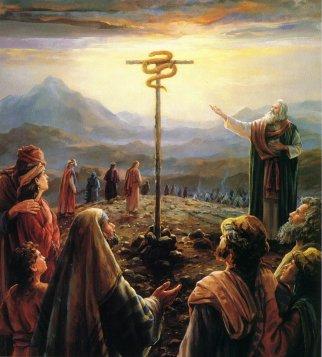 They complained against God and Moses and blasphemed God’s gift, the bread from heaven. They suffered snakebites in punishment for their sins. The snakebites caused great pain, in many cases followed by death. This great suffering brought many of them to acknowledge their sin to Moses and ask his intercessory prayer that the serpents be removed. Now, God certainly could have simply removed the serpents and healed the people on the basis of their interior repentance. Instead, He provided through Moses a peculiar ritual, in which those who participated could “live”.
What can we say about this ritual?
- It required a specific action on the part of the minister: Moses had to place a “fiery serpent” on a pole and make it accessible to the people.
- The ritual bore a divine promise: God said that “every one who is bitten” would survive upon seeing the serpent.
- It required a specific action on the part of the one desiring healing: he must look upon the serpent. In this, each person hoping to be healed needed to acknowledge his sins by gazing upon the representation of the consequence of their sins, the wages of which is death.
- It was effective. The passage specifically tells us that people indeed were saved from death by obediently performing the outward action demanded by the rite.
- It did not require perfect interior repentance. The outward action perhaps depended on at least some sort of repentance, but the 'bar' was set low, so to speak.
- The snakes themselves, as well as the painful bites they caused, were not taken away. The people still had to suffer from painful but temporary consequences of their sins. Yet God, through the ritual, cancelled the fatal outcome of their punishment.
- Healing was on God's terms, not the people's. They wanted their suffering taken away. Instead, God gave them life. They wanted their wishes granted simply by their request to Moses. Instead, God required a specific action that would require and manifest obedience on the part of the sinner.
Jesus, in the Gospel of John, relates this reality to Himself. In fact, the incident in the desert foreshadows the crucifixion of our Savior. The serpents were not sin, but they were sent by God because of sin, and to chastise, and to urge sinners to repentance. Jesus was not sin, but He was sent by His Father because of sin, and to call sinners to repentance. The serpents and their icon on the pole together brought conviction of sin and a means of rescue from its fatal consequence: natural death. The crucified Lord brought knowledge of sin and a means of rescue from its eternal spiritual consequence: eternal death.
21 For our sake he made him to be sin who knew no sin, so that in him we might become the righteousness of God.2 Corinthians 5:21
- Who was healed… everyone who repented, or everyone who looked at the serpent?
–Those who looked at the serpent. - Did anyone survive who did not look at the serpent?
-We aren’t told.
The serpent on the pole prefigures the sacraments of the New Covenant, particularly Baptism. In Baptism, God has prescribed a simple ritual which He requires man to perform in order to obtain a supernatural promise: forgiveness of sins and a share in the very life of God.
38 And Peter said to them, "Repent, and be baptized every one of you in the name of Jesus Christ for the forgiveness of your sins; and you shall receive the gift of the Holy Spirit. 39 For the promise is to you and to your children and to all that are far off, every one whom the Lord our God calls to him."Acts 2:38-39
Again God 'sets the bar low' in order to make His grace and salvation accessible to everyone, including us many who have difficulty repenting perfectly of our sins. God helps us to understand just how unmerited His forgiveness is, by attaching it as a divine promise to the simple human act of washing, but washing that is always received, never done for oneself. People desiring Baptism do not and can not baptize themselves.
The outward act of Baptism is so simple, so commonplace... yet so illustrative of the great supernatural reality taking place: the Spirit hovers over the water; water flows from the side of the Savior;
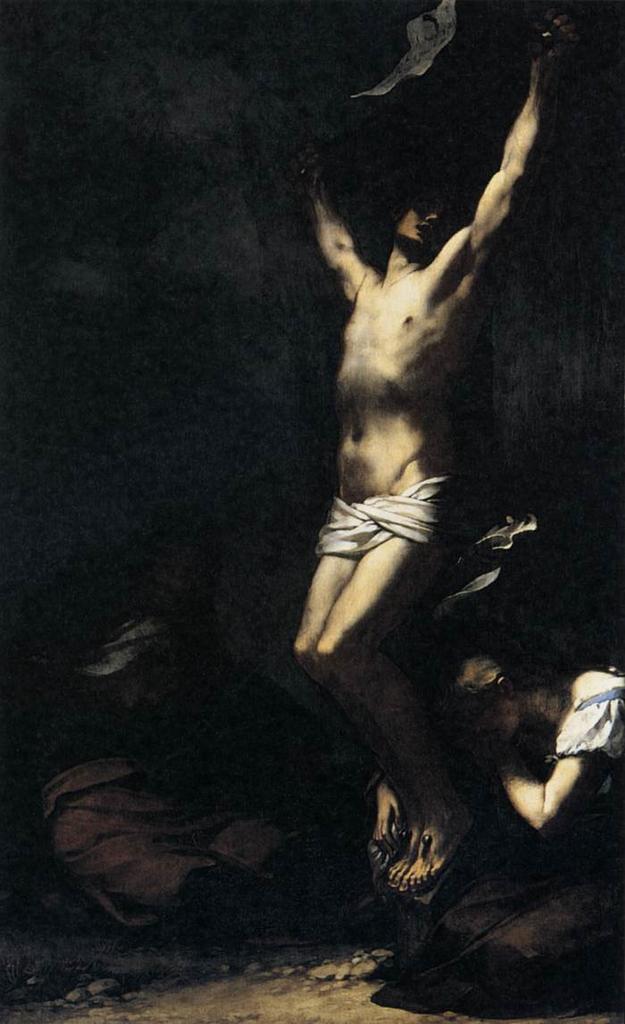 God says "Let there be Light"... and the Light of Christ dawns upon the first day of a new creation more glorious than God's creation of the universe. All we need do is cooperate to the extent that God's grace has enabled our feeble will. If all we can do is set our eyes upon the cross, if all that time permits is the brief expression of faith of the thief on a cross, then God can save. But let us not put ourselves and our children in the category of those Israelites who did not gaze upon the serpent on the pole either out of pride, negligence, or disbelief. We can not safely presume they were saved.
The Bible plan -God's plan- is for us to preach and follow the sure and level path that God has provided, which begins with Baptism to ignite the lamp of our soul and set our course toward heaven. In this washing we are assured to receive the promise of eternal life through the waters of Baptism, to gaze upon our Savior through the lifegiving water flowing from His side:
he saved us, not because of deeds done by us in righteousness, but in virtue of his own mercy, by the washing of regeneration and renewal in the Holy Spirit...Titus 3:5
17 The Spirit and the Bride say, "Come." And let him who hears say, "Come." And let him who is thirsty come, let him who desires take the water of life without price.Revelation 22:17
Saturday, September 10, 2005
1 Corinthians 5: Let us celebrate the festival
1 Corinthians Chapter 5 (RSV) 1 Corinthians 11:23-29
1 It is actually reported that there is immorality among you, and of a kind that is not found even among pagans; for a man is living with his father's wife. 2 And you are arrogant! Ought you not rather to mourn? Let him who has done this be removed from among you. 3 For though absent in body I am present in spirit, and as if present, I have already pronounced judgment 4 in the name of the Lord Jesus on the man who has done such a thing. When you are assembled, and my spirit is present, with the power of our Lord Jesus, 5 you are to deliver this man to Satan for the destruction of the flesh, that his spirit may be saved in the day of the Lord Jesus.  One who scandalously lives an immoral life should be expelled from the assembly for his own good and the good of the Church. Sometimes excommunication is a necessary medicine, for by it the sinner may be brought to his senses and realize his spiritual danger.
Excommunication is a warning and a foreshadowing of the dire eternal consequences that certainly will follow if one persists unrepentant in grave sin. In this particular case Paul pronounces his binding judgment "in the name of the Lord Jesus", and imparts his authority to the church at Corinth with the command to expel the manifest sinner. Here we see a concrete exercise of apostolic authority in a disciplinary matter. Without this authority, exercised by those who legitimately bear it, the Church would be powerless to impose this serious remedy. 6 Your boasting is not good. Do you not know that a little leaven leavens the whole lump? 7 Cleanse out the old leaven that you may be a new lump, as you really are unleavened. For Christ, our paschal lamb, has been sacrificed. 8 Let us, therefore, celebrate the festival, not with the old leaven, the leaven of malice and evil, but with the unleavened bread of sincerity and truth.
Unleavened bread, the paschal lamb, "the festival"... these all are references to the Passover feast. Paul speaks not of the Old Covenant festival in which many lambs are sacrificed and consumed, but rather of the New Covenant festival foreshadowed by the old. In this new festival, the Eucharist, believers are united to the Paschal Lamb, Christ, and to His once-for-all sacrifice that transcends time. We partake of the flesh of the Paschal Lamb and drink the precious Blood He shed for us, and thereby share in His eternal life. This side of Heaven there can not be a more perfect union with Jesus than this: to receive Him -His Body and Blood, Soul and Divinity- within our souls and within our bodies; and both body and soul receive the foretaste and pledge of eternal life whose roots are sunk unshakeably deep in the rock that is Christ.
Paul draws an analogy between the bread of this feast and the Corinthians themselves, in order to illustrate a lesson. In preparation for a feast of such intimate union with God the bread must be prepared from dough unpolluted by the leaven of boasting or immorality. The Corinthians themselves are referred to not merely as preparing or partaking of the bread, but as actually being that bread. If they are to "celebrate the festival" without demeaning or contradicting its meaning, they themselves must be free from the leaven that can spoil the whole loaf of bread. 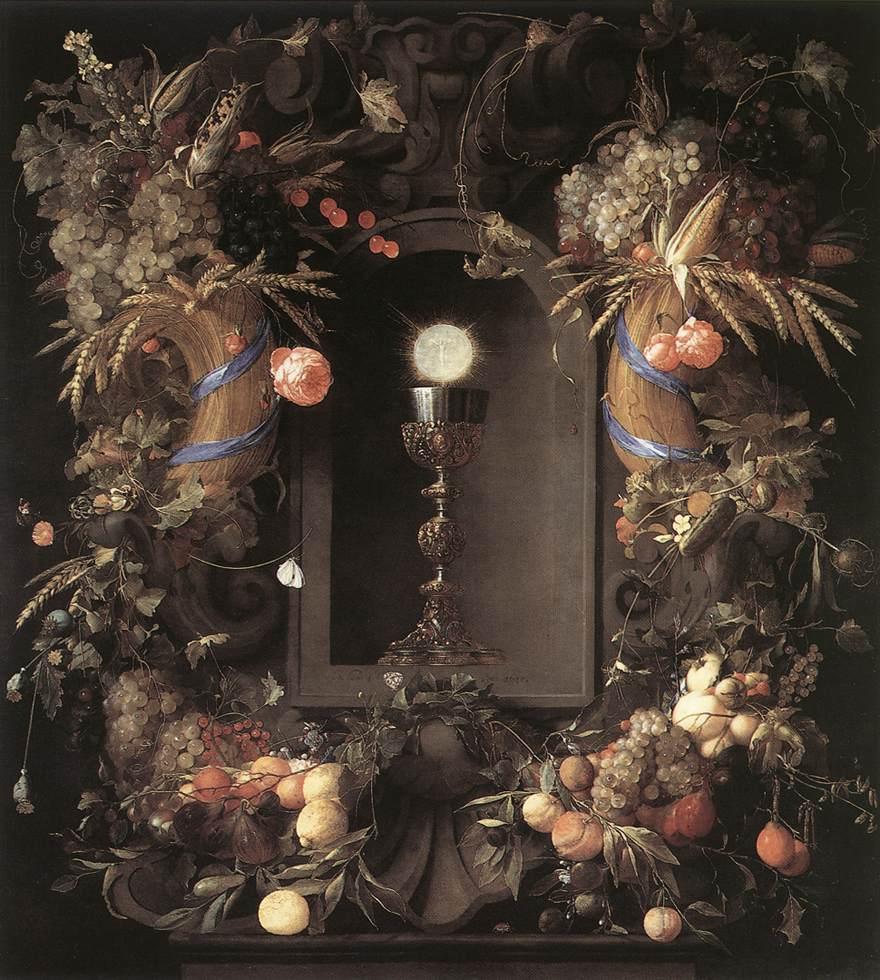
Why is it so important that the bread -both the actual bread consumed in the festival and the figurative "bread" composed of believers- be unleavened? In chapter 11 Paul writes: 23 For I received from the Lord what I also delivered to you, that the Lord Jesus on the night when he was betrayed took bread, 24 and when he had given thanks, he broke it, and said, "This is my body which is for you. Do this in remembrance of me." 25 In the same way also the cup, after supper, saying, "This cup is the new covenant in my blood. Do this, as often as you drink it, in remembrance of me." 26 For as often as you eat this bread and drink the cup, you proclaim the Lord's death until he comes. 27 Whoever, therefore, eats the bread or drinks the cup of the Lord in an unworthy manner will be guilty of profaning the body and blood of the Lord. 28 Let a man examine himself, and so eat of the bread and drink of the cup. 29 For any one who eats and drinks without discerning the body eats and drinks judgment upon himself.
The New Covenant festival of which Paul speaks is the Eucharist, in which Christians distinguish by faith and receive the Body and Blood of the Lord Jesus, and are united with Him. This not a merely symbolic union, but a profound encounter between Jesus and the children of God. Therefore Jesus, Who is the sacrificial Lamb of the New Covenant and the Bread of Life, is united with His bride the Church, which is to be a pure and unleavened loaf set apart by God for Himself. We must not dare to attempt Eucharistic union with Jesus without first renouncing sin and asking to be made capable of such union.9 I wrote to you in my letter not to associate with immoral men; 10 not at all meaning the immoral of this world, or the greedy and robbers, or idolaters, since then you would need to go out of the world. 11 But rather I wrote to you not to associate with any one who bears the name of brother if he is guilty of immorality or greed, or is an idolater, reviler, drunkard, or robber--not even to eat with such a one. 12 For what have I to do with judging outsiders? Is it not those inside the church whom you are to judge? 13 God judges those outside. "Drive out the wicked person from among you."
In chapter 4 we were warned not to pass judgement on others. Here we are told not to hang around with "immoral men". Doesn't this imply we have to judge which men are immoral? Is Paul inconsistent? I don't think so.
I think that in chapter 4 the main points about judgement are these:
On the other hand, in chapter 5 Paul insists that a fellow believer who is living an openly immoral life should be avoided. To me it seems that this caution applies equally to our spiritual fathers as well as other fellow believers. That is, if an apostolic successor -a validly ordained bishop of the Catholic Church- is living a manifestly scandalous life then I would do well to avoid him. However, I would not do well to deny the authority he has been given, or to hold him or his brother bishops in contempt.
Jesus picked sinners to be apostles, and he has picked sinners ever since then to carry out their apostolic ministry. We are commanded by Paul to accept those sent to us -like them or not- and only in cases of manifest immorality may we have justification to pass temporary censure against other believers, especially those sent to us by the apostles to teach and guide us.