Crossfunction: apostolic tradition
Showing posts with label apostolic tradition. Show all posts

Monday, June 01, 2015

I disagree with you concerning biblical canonicity. The RCC had their own way of determining which writings would be included but then early church father's such as Irenaeus, Origen, and others already had specific rules to judge which writings should be included and which should not. The canon was already in existence before 312 A.D. which is official beginning of the RCC under Constantine.

And by the way, there is a sticking point where we'll always disagree and is at the heart of what many people from many denominations consider heresy. Church history is very important to study and remember for just the reasons we just cited, e.g., for determining the Canon of Scriptures , but our definition of "handed-down Apostolic teaching" is the rub. The Bible already gives us all the Apostolic teaching we need. Nowhere in scripture is there any handing down of any kind of this type of authority. You base your beliefs on an incorrect rendering of Christ's words which say upon Peter He would build His church. But it was upon Peter's confession of Him as Lord that was the "foundation."

Many "protestant" denominations such as the ECUSA, and Anglicanism, for example, yield greatly to church history and tradition, and rightly so. However, they do not place these important tenants above Holy Scripture. The ONLY person who can enlighten us about the interpretation and right use of the Word of God is the Holy Spirit Himself, and no other, not Pope, Bishop, Priest, or anyone.

-Josie


Josie,

1. Your claim that "the canon was already in existence before 312 A.D." doesn't reflect reality. If the canon of Scripture was clearly settled by 312 A.D. there would have been no need for subsequent definitions of the canon. Yet in different areas different canons were used as late as the fourth century, and different canons persist even today. Because of the ongoing controversy the Council of Hippo under Pope Damasus I defined the canon in 382 A.D., and the same canon has been reiterated by subsequent popes and councils: even after the Protestant Reformers adopted a different canon.

2. Your claim that "the Bible already gives us all the Apostolic teaching we need" ironically is unsupported by Scripture. No passage -no, not even 2 Timothy 3- makes any claim that Scipture alone contains "all the apostolic teaching we need". That's a Protestant invention.

3. Many Protestants claim that Matthew 16:18 does not say what it clearly says: that Jesus was giving Simon the name "rock", and that upon this "rock" He would build His Church. But it does plainly say that. Elsewhere in Scripture we are told that the apostles are the "foundation" of the Church (Revelation 21:14). And we are told that believers are "living stones", and that we form a "spiritual edifice" (1 Peter 2). And Jesus is the "cornerstone". Elsewhere Jesus is called the "capstone" (Ephesians 2:20). It's unfortunate that Protestants fight so hard against the plain meaning of the passage. So, no, Peter's not God; he's not perfect; he's not all-knowing; he's not sinless. But he is the "rock" that Jesus picked to serve in some sense as the foundation of His Church.

4. You said, "Nowhere in scripture is there any handing down of any kind of this type of authority." You need to go back and do some more reading. There is abundant evidence that Jesus gave the apostles authority that was then given to other men by means of "handing down": from the Greek "paradosis", and the Latin "traditio". English: "tradition". Paul spoke of it a great deal with Timothy, and elsewhere. And in Acts we see the apostles (under Peter's guidance) clearly aware that Judas' "office" was vacant and his "place" needed to be filled: so they elected Matthias to this ministry. Homework for you: find the passage in Paul's writings where he refers to five (five!) successive generations of apostolic authority.

5. The RCC specifically denies that it places tradition "above Holy Scripture", and I also deny it. You can't legitimately separate Scripture and apostolic tradition.

Finally, You say "The ONLY person who can enlighten us about the interpretation and right use of the Word of God is the Holy Spirit Himself, and no other..." If that is so, why are we having this discussion? If we Christians are not to listen to each other about the Word of Life, then why should I listen to you? And if I listen to you, how much more should I listen to those who have been appointed teachers in the Church, and who are in union with those who have received apostolic authority?

God bless you, Josie.

Thursday, July 08, 2010

Getting it right

Hi, Ian!

You wrote,

hi John,
Sorry for the delay in getting back to you. I'm not a student of theology and am not able to interpret why you feel that what is written here is evidence of apostolic authority. This directive seems kind of harsh and the date suggests it is the word of men

The Creed of the Council of Toledo, A.D. 400, 447: (14)
"The rule of the Catholic faith against all heresies...
12. If anyone either believes that any scriptures, except those which the Catholic Church has received, ought to be held in authority or venerates them, let him be anathema."


We all believe in the same new testament and it changed everything, so why then is there this strife, why does the Holy Spirit dwell in people of all denominations, how does someone like Heidi Baker do miracles, by the glory of God which is working though her. Her ministry is non-denominational. I suggest that it's not what church you go to, that's not it at all, but how you well you follow Jesus's instructions about humbling yourself etc..so that Christ dwells in you, Ep 3:17 I started my walk with God just over a year ago and am a bit disappointed that more believer's aren't tuned into what God says we can do, Mark 16 : 17 & 18 or John 14: 13 & 14 according to the word, we should really be able to make a big difference. We need more of the kind of teaching about what we can do if we get it right [emphasis added]

-Ian K., letter of June 24, 2010 (reprinted with permission)

Ian, congratulations to You for just recently starting to walk with God!  That's wonderful and exciting, and with God's grace You'll continue to grow in faith, hope and love, persevering to the end. 

You're right to say that the Holy Spirit moves in the hearts of Christians in many denominations. But there's more to it.  If we want to gain everything the Spirit has to offer, we need to cooperate.  If God offers us many of His gifts through the ministry of the Church He founded, can we expect to receive them all if we are not united to His Church? You can't be truly united to Jesus without being united to His Church. Pride might try to seduce us into doing it all on our own, but don't be fooled! Jesus knew what He was doing when He founded His Church, and it's for our blessing.

If You had to go on a dangerous combat mission You would want to be trained, equipped, and accompanied by the best military officers.  You'd want to survive Your mission.  You'd want to have every possible advantage, and You'd want to get it right.

The Christian life is no less important!  It's dangerous because we still have defects and easily fall into sin.  Living by faith does not mean "winging it" without the many helps the Holy Spirit provides through the Church.  Does God provide graces and assistance to Christians who belong to many denominations?  Certainly.  But does He provide ALL His assistance in this manner?  No.

Living by faith is both a spiritual and a practical matter.  We must trust God, but we must trust Him enough to do what He says and unite ourselves to His Church.  There we find the 'big guns' of the spiritual life: the Sacraments which Jesus instituted, fellowship, apostolic teaching, and many other blessings too.  It simply makes sense to equip ourselves with the best that God offers us. It's not enough just to do good works. We need to be securely founded on the truth which Jesus entrusted to the apostles.

This is how we can really get it right.


Now, a response to Your quotation from the Council of Toledo... You raise two objections against it.

  • First: You say it sounds "harsh", but I say it's merely an uncompromising statement about which writings belong in the Bible. It's very similar to Paul's statement to the Galatians to safeguard the preaching they had received from apostolic sources:

    "But even if we, or an angel from heaven, should preach to you a gospel contrary to that which we preached to you, let him be accursed."
    Galatians 1:8 RSV

    Is Paul's statement harsh? Perhaps. But we should be more concerned with whether it's true, and whether it applies to us. There are lots of statements in Scripture which may seem a little harsh. The apostles sometimes used pretty tough talk, and Christians today probably need a bit of that, just like in the first century. Shouldn't the Church proclaim the truth with whatever words best fit the situation?
  • Second: You imply that since the Creed of the Council of Toledo occurred in the fifth century A.D. that therefore its teachings are "the word of men".

    I dealt with this issue in my previous letter, and I don't want to waste Your time by repeating my explanation in detail. But in a nutshell, Scripture teaches clearly that the apostles' legitimate successors today have the same authority to teach that the apostles had in the first century. When they do so they are not teaching the "words of men" but the Gospel of Jesus Christ. If we reject them we reject Christ.

You said You're "not a student of theology", and didn't respond to my biblical defense of the importance of the Church. But You're a Christian now, and Christians have to be committed to following the Gospel truth wherever it leads. Call it theology if You want, but it's really just the Good News of Jesus Christ.  And Scripture shows that if we want the fullness of that Gospel truth, our best option is faithful unity with the apostles and their successors.  

"So then, brethren, stand firm and hold to the traditions which you were taught by us, either by word of mouth or by letter."
2 Thessalonians 2:15 RSV

Arguing that we don't need the apostles or Church -"the pillar and bulwark of the truth" (1 Timothy 3:15)- is like telling God that we don't need exactly what He has revealed we do need.

The truth about this is too important to gloss over. As a Christian You have a right to know the truth, and a duty to respond to it.

Ian, good talking with You! I hope You'll write back with Your thoughts.

Cheers,
John Robin.

Sunday, June 06, 2010

Is the Bible the pillar of truth?

Yesterday I received a letter from a fellow who’s got some pointed questions (and misgivings) about the Catholic Church. Below I take up one of Ian K's issues, and hope we'll have an opportunity to discuss them all… (I'm reprinting Ian's name and most of his letter with his kind permission.)
______________________

hi- the pope claims that the only true church is catholic. How can a statement like this be made? I belong to a non-denominational church who's only doctrine is what is written in the bible. The catholic church clearly worship idols, all the statues of different saints or the virgin Mary, who was only a woman not a deity. The catholics are responsible for more negative PR than the devil. How come you could only eat fish on Fridays and then suddenly it becomes ok to eat meat. I have yet to come across either in the scriptures. This however, is only a small point but it shows the catholic doctrines are from man and not from the word of God. You say yourselves "Who can forgive sins but God alone?" -Mark 2:7 RSV yet confess to priests and they forgive you. That alone should be the end of the discussion. But there's so much more. What's with all the priests getting away with pedophilia and the many examples of the churches being a huge, magnificent structure in the middle of a slum. This is missing the whole point (wasn't it share the wealth?) and, at the same time, driving people away from God...
-Ian K., letter of June 5, 2010
______________________


Hi, Ian, nice to hear from You. You’ve got lots of good questions, but too many to try answer all at once. I’d like to try to focus on one point at a time, and then see where it takes us, okay?

What does the Bible say about it?


Perhaps the most basic issue You raise is about where Christian doctrine comes from. You wrote,

“I belong to a non-denominational church who's only doctrine is what is written in the bible.”

Well, You’ve got lots of fellow Protestants who likewise believe that Scripture and Scripture alone is the sole rule of faith and morals. You probably know that this doctrine is called sola scriptura, and of course it’s one of the pillars of Protestantism.

However sola scriptura is not taught by Scripture. It’s not even compatible with Scripture. In fact, Scripture teaches against it clearly, repeatedly, and emphatically. Yet many people believe the doctrine because, well, they love Scripture as the inspired Word of God (which of course it is), they’ve been taught by their family or their church to accept this doctrine, and they assume it's true.

But if we love Scripture, we must love the truth and desire to know more clearly whether Scripture really teaches what we've been told it does. So what does the Bible say about it?

Scripture does not teach that Jesus delivered His saving message by simply dropping a book from the clouds and leaving us to figure it out on our own. Instead, He picked disciples and personally taught them His message through words, deeds, miracles... His whole life, death and resurrection. He appointed some of them to be apostles with the mission to carry His message to the ends of the earth. He gave them the protection of the Holy Spirit to guard the purity of the message. And He gave Peter, and the others in union with him, the authority to interpret it definitively and preach it without error.

"And I tell you, you are Peter, and on this rock I will build my church, and the powers of death shall not prevail against it. I will give you the keys of the kingdom of heaven, and whatever you bind on earth shall be bound in heaven, and whatever you loose on earth shall be loosed in heaven.
-Matthew 16:18-19 RSV

"He who hears you hears me, and he who rejects you rejects me, and he who rejects me rejects him who sent me."
-Luke 10:16 RSV

And Jesus came and said to them, "All authority in heaven and on earth has been given to me. Go therefore and make disciples of all nations, baptizing them in the name of the Father and of the Son and of the Holy Spirit, teaching them to observe all that I have commanded you; and lo, I am with you always, to the close of the age."
-Matthew 28:18-20 RSV

This apostolic ministry is at the very foundation of the Church Jesus founded, and it’s something the Church can’t do without in the twenty-first century any more than it could in the first century. That’s why from the very beginning the apostles used their authority to appoint other men to share in their apostolic ministry. In the book of Acts we see Matthias appointed the first successor to the apostolic ministry. (cf. Acts 1:15-26)

No other foundation


"And the wall of the city had twelve foundations, and on them the twelve names of the twelve apostles of the Lamb."
-Revelation 21:14 RSV

"You form a building which rises on the foundation of the apostles and prophets, with Christ Jesus himself as the capstone."
-Ephesians 2:20 RSV

"...and like living stones be yourselves built into a spiritual house..."
-1 Peter 2 RSV

This is the way Jesus built His Church: He’s the cornerstone; His apostles are the foundation; we are the living stones which are built upon that foundation. We're not free to change the way Jesus built His Church. In any case, can the bricks of a building remain secure if they leave their foundation?

So Scripture describes the Church as a "spiritual house", a building with a permanent cornerstone, a permanent foundation, and living stones connected to each other and united to Christ through that foundation.

Where's the Gospel?


Now, it wasn't until years after Jesus ascended to Heaven –even decades later, in some cases- that some of these men wrote the books of the New Testament under the inspiration of the Holy Spirit. Where was the Gospel to be found during these years before the New Testament ever existed? How was it preserved, interpreted, and taught before any of it was written down? The same way that Jesus delivered it: through the oral preaching and living example of the apostles and their successors. And did the apostles stop their preaching once the books of the New Testament were completed? Of course not. They wrote these books to supplement and reinforce their ongoing teaching, not to replace it.

“But on some points I have written to you very boldly by way of reminder...”
-Romans 15:15

The apostolic preaching continued, carried on through the centuries by those appointed by the apostles and their successors.

The apostle’s writings are authoritative not because they are written, but because they are of apostolic authority. It is through apostolic authority that we know which books belong in the Bible, and it is through this same authority that we are helped to discover their authentic meaning.

From the hands of the apostles


My point is not to deny the importance of Scripture, but rather to insist that it’s of utmost importance to interpret and understand Scripture correctly, according to the mind of Jesus and His apostles. For this we must use the means that Jesus has provided His Church. And Jesus gave His Church apostles with the authority to interpret and teach. Should we study Scripture privately and prayerfully? Certainly. But always we must listen to the apostles and their successors and embrace their teaching. Scripture repeatedly warns us against accepting doctrines that contradict the apostolic tradition.

"So then, brethren, stand firm and hold to the traditions which you were taught by us, either by word of mouth or by letter."
-2 Thessalonians 2:15 RSV

"Now I would remind you, brethren, in what terms I preached to you the gospel, which you received, in which you stand, by which you are saved, if you hold it fast -- unless you believed in vain."
-1 Corinthians 15:1-2 RSV

"But even if we, or an angel from heaven, should preach to you a gospel contrary to that which we preached to you, let him be accursed. --As we have said before, so now I say again, If any one is preaching to you a gospel contrary to that which you received, let him be accursed."
-Galatians 1: 8-9 RSV

"And we [the apostles] have the prophetic word made more sure. You will do well to pay attention to this as to a lamp shining in a dark place, until the day dawns and the morning star rises in your hearts. First of all you must understand this, that no prophecy of scripture is a matter of one's own interpretation,"
-2 Peter 1:19-20 RSV

If we cut ourselves off from the apostolic preaching, claiming that “we don’t need apostles because we have the Holy Spirit”, we delude ourselves.  The apostolic tradition is a most precious safeguard of the Gospel truth.  Separate ourselves from this, and we separate ourselves from God's appointed safeguards of the Gospel.

"There are some things in them [Paul's letters] hard to understand, which the ignorant and unstable twist to their own destruction, as they do the other scriptures."
-2 Peter 3:16 RSV

Rejecting apostolic succession and the Church's teaching authority, Christian denominations have arisen, split over doctrinal disputes, multiplied, and split, again without ceasing. One need only browse the internet or the phone book to see the resulting disunity: tens of thousands of Christian churches with thousands of different creeds: a pathetic tower of Babel where the world needs to see one, shining city on a hill.

Standing on the pillar of truth


"And they devoted themselves to the apostles' teaching and fellowship, to the breaking of bread and the prayers."
-Acts 2:42 RSV

The protection of the Holy Spirit which Christians enjoy has several forms, but primarily we receive it through remaining faithful to what we’ve received from the teachers God has sent us. But this does not permit us to pick teachers according to our own liking. Rather, the pattern of Scripture urges us to seek out those who truly have apostolic authority, those who, like Mathias, were picked and appointed by those who themselves received this authority.

Paul wrote that the Church is:

"...the household of God, which is the church of the living God, the pillar and bulwark of the truth."
-1 Timothy 3:15 RSV

It is this Church which Jesus gave the power to interpret and explain His message, and many gifts to help us live that message in a way pleasing to Him and helpful to our salvation and sanctification. If we wish to be united with Him, should we not seek direction from those whom He sent to guide us?

Again, according to Scripture, what is “the pillar and bulwark of the truth”? The Church. The Church is our guarantee of receiving the truth of the Bible intact. Doctrines which contradict what the Church teaches therefore contradict the apostolic preaching and should be rejected, no matter how pleasing they may sound.

Ian, most Christian churches deny that they have the apostolic authority I have described above. The Roman Catholic Church claims to have this authority, and this claim is supported by 2000 years of history showing an unbroken chain of apostolic succession.

Some Christians deny this history exists, deny that the apostolic ministry is a permanent part of the Church, deny even that it even existed past the first century. But to deny these things one must deny Scripture. And this we can’t and mustn’t do.

Ian, I propose to You that sola scriptura -the belief that all Christian doctrine should or could be based purely on Scripture- is actually a doctrine of men, not of God. It’s not a doctrine taught by Jesus in the 1st century, and it didn’t gain traction until it was promoted by certain European men in the 16th century. It’s a pillar of Protestantism, but it’s not a pillar of Scripture, and certainly not a pillar of truth.

So, Ian, I ask You: what do You think of the biblical fact of apostolic authority which I've tried to outline above? Do You agree that we should take it seriously?

Thank You for writing to me, Ian, and for Your great questions. Perhaps once we finish up with sola scriptura and apostolic authority we could talk about Your other questions.

Please do send Your thoughts!

Cheers,
John Robin.

Wednesday, August 12, 2009

A democratic Church?


"But if thy brother shall offend against thee, go, and rebuke him between thee and him alone. If he shall hear thee, thou shalt gain thy brother. And if he will not hear thee, take with thee one or two more: that in the mouth of two or three witnesses every word may stand. And if he will not hear them: tell the church. And if he will not hear the church, let him be to thee as the heathen and publican."
Matthew 18:15-17 Douay-Rheims Bible
"If your brother does something wrong, go and have it out with him alone, is between your two selves. If he listens to you, you have won back your brother. If he does not listen, take one or two others along with you: the evidence of two or three witnesses is required to sustain any charge. But if he refuses to listen to these, report it to the community; and if he refuses to listen to the community, treat him like a pagan or a tax collector."
Matthew 18:15-17 New Jerusalem Bible


I wonder why the translators of the New Jerusalem Bible decided to render the Greek word "ekklesia" (church, assembly) as "community"? Such a decision seems designed to avoid the implication that some types of dispute might be mediated or resolved by leaders of the Church. "Community" in this translation would seem to suggest a more democratic method of resolving a dispute: perhaps everyone goes down to the meetin' hall and votes on it.

...except the Bible presents an image of the Church that doesn't match this democratic model. Important questions and disputes were not decided by opinion polls of people "in the pews", but by the authority of the apostles.

The Church is a community, yes, but a community with an apostolic foundation and hierarchical structure, as Scripture plainly shows. It's not merely a group of people sharing a common faith, but rather a Body.

A body is composed of parts, but it's more than just a lifeless pile of disconnected body parts: a horrifying image. A living body's members are arranged in a harmonious structure, each member having its function and place, each vitally important, each serving the others, and through them the whole.

Similarly, the Church of the New Testament is not just a collection of believers. It's a body of members united to Christ, its cornerstone and supernatural Head, and with the apostles and their legitimate successors as the foundation upon which it stands. Apostolic authority is indispensable to the Church's ability to preserve and interpret the Gospel message, and for the Church to be able to apply that message to the situations that it encounters every day.

This is why the Catholic Church continues to have a pope, bishops, priests, and deacons, and carefully preserves and transmits apostolic authority through the imposition of hands. Jesus gave His Church such a structure, and nothing in His teachings indicates He ever wished that structure to change.

Thursday, November 17, 2005

1 Corinthians 14: May women speak in church?

1 Corinthians Chapter 14 (RSV)


14:33. For God is not the God of dissension, but of peace: as also I teach in all the churches of the saints.
14:34. Let women keep silence in the churches: for it is not permitted them to speak but to be subject, as also the law saith.
14:35. But if they would learn anything, let them ask their husbands at home. For it is a shame for a woman to speak in the church.
14:36. Or did the word of God come out from you? Or came it only unto you?
14:37. If any seem to be a prophet or spiritual, let him know the things that I write to you, that they are the commandments of the Lord.
14:38. But if any man know not, he shall not be known.


Do You follow Paul’s decree in Your church? Does Your church hold that it is “shameful” for women to speak in church and therefore they must “keep silence” there, learning by questioning their husbands at home?

Don’t tell me this passage is difficult, because Paul is clear and straightforward in his writing. Some passages of Scripture are couched in mysterious language, but this certainly isn’t one of them. If we have difficulty with this passage it’s not because we don’t understand it, but rather because we do understand.

So if this passage is abundantly clear in its teaching that women must “keep silence” in church, why do we spend any time now debating the matter as if it were not settled in Scripture? The reason is that we are not accustomed to following Paul’s decree. For most of us our experience of church has been free from any such restriction upon women. Many of us perhaps have never even heard this matter discussed.

Upon finding this passage in our Bible reading maybe we continued on without seriously considering the possibility that our churches are in grave disobedience toward an apostolic instruction. And if we realized that Paul’s rule is contradicted or cancelled nowhere in Scripture, this too raised no serious concern. The rule was so foreign to our culture and church experience that it obviously must mean something other than its self-evident meaning, or at least is no longer binding upon the church today. Everyone apparently knew this, because nobody bothered to discuss it. This mindset was transmitted to us not from the pulpit, but non-verbally, as if by silent osmosis. But is this a scripturally sound position for us to adopt?

I put the question to my Protestant friends: Is it a biblical principle that our interpretation and acceptance of a solemn command of Scripture should depend upon the interpretations and traditions we have received from our church? Doesn’t the principle of sola scriptura (“Scripture alone is our rule of faith”) insist that we reject “traditions of men” that appear to us contrary to Scripture? Yet most Protestants and Catholics permit women to speak in church.

For Catholics this is not a problem, for we can simply answer, “Yes, it definitely is a biblical teaching that the authentic interpretation of the message of Christ is revealed through the Scriptures AND the preaching of the apostles AND their legitimate successors. And their successors for centuries have not continued to require women to keep silent in church.”

As a Bible-believing Christian I firmly believe that Jesus keeps His promise to preserve His Church from falling into error concerning the “commandments of the Lord”. It’s clear to me that the principal way in which He does this -“the Bible way”- is through the action of the Holy Spirit, Who preserves correct interpretation of God’s Word through the teachings of the apostles and those who have received the apostolic imposition of hands and remain united to the bishop of Rome, the successor of Peter.

But if one rejects this Catholic view and yet insists that women may speak in church… I just can’t imagine how one can defend that from Scripture.

Saturday, September 03, 2005

Paul to Proteus...

We have received word that Paul does not intend to dignify Proteus' letter with a written response, but will "correct" his "son" upon his next visit.

Friday, September 02, 2005

Shall we listen to Paul or Apollos?

Proteus, a son of Abraham, a citizen of Corinth, and follower of the Christ Jesus preached by Apollos, to Paulus a brother and fellow believer. Greetings.

Are we then to accept the teachings of every man who preaches Christ, even though his words and actions depart from what God has revealed through our fathers the patriarchs? It is said that You reject circumcision, which Moses gave us as an everlasting covenant. Do you make the children of Abraham equal to pagans? Apollos has preached here in our city on many sabbaths, and has not given us this teaching.

It is further said that you have been expelled from synagogues in many cities and have received the indignation of holy men. How are we to know whether you are sent by God or Beelzebul?

Why should we listen to You?

1 Corinthians 4: Call this man "Father".


1 Corinthians Chapter 4 (RSV)


1 This is how one should regard us, as servants of Christ and stewards of the mysteries of God. 2 Moreover it is required of stewards that they be found trustworthy. 3 But with me it is a very small thing that I should be judged by you or by any human court. I do not even judge myself. 4 I am not aware of anything against myself, but I am not thereby acquitted. It is the Lord who judges me. 5 Therefore do not pronounce judgment before the time, before the Lord comes, who will bring to light the things now hidden in darkness and will disclose the purposes of the heart. Then every man will receive his commendation from God. 6 I have applied all this to myself and Apol'los for your benefit, brethren, that you may learn by us not to go beyond what is written, that none of you may be puffed up in favor of one against another.

7 For who sees anything different in you? What have you that you did not receive? If then you received it, why do you boast as if it were not a gift? 8 Already you are filled! Already you have become rich! Without us you have become kings! And would that you did reign, so that we might share the rule with you! 9 For I think that God has exhibited us apostles as last of all, like men sentenced to death; because we have become a spectacle to the world, to angels and to men. 10 We are fools for Christ's sake, but you are wise in Christ. We are weak, but you are strong. You are held in honor, but we in disrepute. 11 To the present hour we hunger and thirst, we are ill-clad and buffeted and homeless, 12 and we labor, working with our own hands. When reviled, we bless; when persecuted, we endure; 13 when slandered, we try to conciliate; we have become, and are now, as the refuse of the world, the offscouring of all things.

14 I do not write this to make you ashamed, but to admonish you as my beloved children. 15 For though you have countless guides in Christ, you do not have many fathers. For I became your father in Christ Jesus through the gospel. 16 I urge you, then, be imitators of me.

17 Therefore I sent to you Timothy, my beloved and faithful child in the Lord, to remind you of my ways in Christ, as I teach them everywhere in every church. 18 Some are arrogant, as though I were not coming to you. 19 But I will come to you soon, if the Lord wills, and I will find out not the talk of these arrogant people but their power. 20 For the kingdom of God does not consist in talk but in power. 21 What do you wish? Shall I come to you with a rod, or with love in a spirit of gentleness?


My paraphrase:
How should You regard us apostles? We are no more than servants of the servants of God, faithful stewards dispensing the mysteries that God has entrusted to us for the good of His children. Like any servants, we are required by our Master to be faithful. Yet whether I am faithful in Your eyes or the judgement of any human court does not matter to me; not even my own judgement about myself matters. I am not aware of anything against me, but that doesn't prove me blameless. It is the Lord -not You or I- who finally will judge me. Therefore do not presume to pass judgement on the Lord's appointed stewards before He comes in judgement. He is the One Who will uncover the secrets of men's hearts and bring to light what is hidden. Then every man will receive his recompense. I have applied all this to myself and Apollos so that You would understand not to set us, Your teachers, against each other through vain alliegances and prideful divisions, nor should You presume to pass judgement on us. God has appointed us Your teachers, and it is for You to receive us in faithfulness and love, just as we have obediently received the Lord's command. Do not subject us to the scales of human judgement.

For are You any different than us? What good, what holiness do You have that You did not receive from God? If it has all been a gift, why are You proud? So quickly You have become wiser than Your teachers! Already you presume to judge us! Without us You have become kings! How I wish You truly would live as spiritual kings, so that we could reign with You! But God is showing the world through us His apostles the example that You should have followed: we are weak -but You triumph in strength; we are despised -yet You revel in honors. Even now we lack food, drink, clothing, shelter, or home. We toil with our own hands. We bless when cursed. We persevere in suffering. We seek peace with those who slander us. We are despised as the scum of the earth.

I don't write this to shame You, but to warn You as my beloved children. Even if You think You have countless "guides" in Christ, You do not have many fathers. For I -not they- became Your father in Christ Jesus through the Lord's revelation, and You should follow my teaching and example.

Therefore, I Your father have sent You Timothy, my beloved and faithful child in the Lord, to represent me to You in Christ. He will teach You with the authority by which I myself teach the churches everywhere. But some do not submit to my authority, perhaps thinking I shall not come to You. But I shall come, if the Lord wills, and I will not be swayed by vain arguments but shall test the true "power" of these arrogant people. For the kingdom of God is not talk but power. Which do You prefer? Must I punish my children, or shall I visit You in gentleness?

Monday, July 11, 2005

Titus 1: "...I also appointed thee"

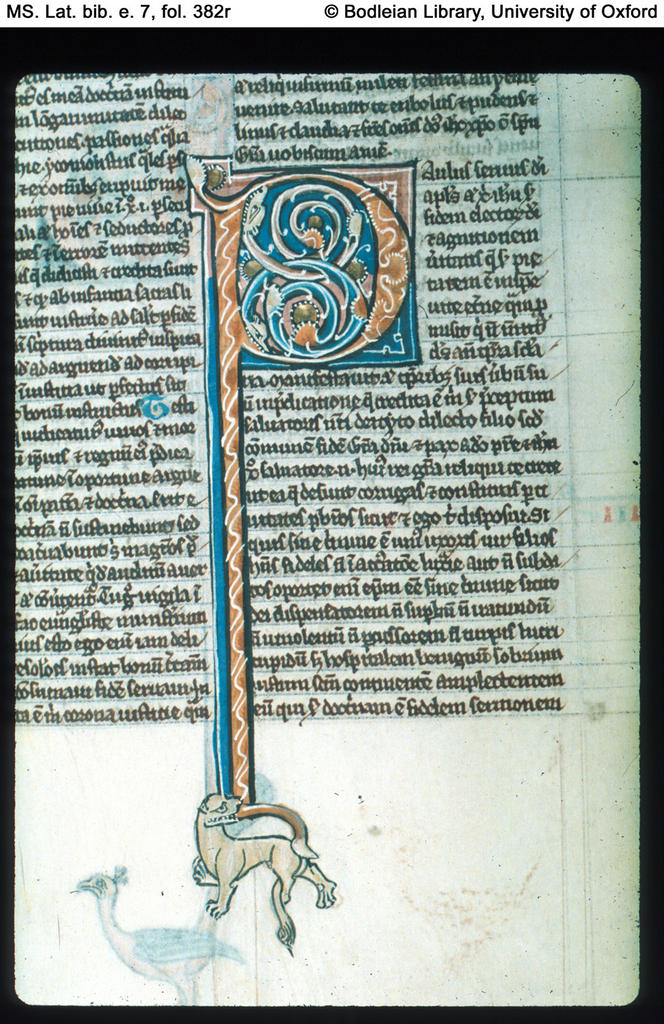
Book of Titus, in Latin, 13th c.  Oxford, England


The Epistle of St. Paul to Titus, Chapter 1

1 Paul, a servant of God, and an apostle of Jesus Christ, according to the faith of the elect of God and the acknowledging of the truth, which is according to godliness: 2 Unto the hope of life everlasting, which God, who lieth not, hath promised before the times of the world: 3 But hath in due times manifested his word in preaching, which is committed to me according to the commandment of God our Savior: 4 To Titus my beloved son, according to the common faith, grace and peace from God the Father, and from Christ Jesus our Savior. 5 For this cause I left thee in Crete, that thou shouldest set in order the things that are wanting, and shouldest ordain priests in every city, as I also appointed thee: 6 If any be without crime, the husband of one wife, having faithful children, not accused of riot, or unruly. 7 For a bishop must be without crime, as the steward of God: not proud, not subject to anger, not given to wine, no striker, not greedy of filthy lucre: 8 But given to hospitality, gentle, sober, just, holy, continent: 9 Embracing that faithful word which is according to doctrine, that he may be able to exhort in sound doctrine, and to convince the gainsayers. 10 For there are also many disobedient, vain talkers, and seducers: especially they who are of the circumcision: 11 Who must be reproved, who subvert whole houses, teaching things which they ought not, for filthy lucre's sake. 12 One of them a prophet of their own, said, The Cretians are always liars, evil beasts, slothful bellies. 13 This testimony is true. Wherefore rebuke them sharply, that they may be sound in the faith; 14 Not giving heed to Jewish fables and commandments of men, who turn themselves away from the truth. 15 All things are clean to the clean: but to them that are defiled, and to unbelievers, nothing is clean: but both their mind and their conscience are defiled. 16 They profess that they know God: but in their works they deny him; being abominable, and incredulous, and to every good work reprobate.


I risk repetition on the topic of apostolic authority, but it's only because Paul repeatedly stresses this central theme in his letters. In his letter to Titus Paul raises the matter again before he even concludes his greeting!

3 But hath in due times manifested his word in preaching, which is committed to me according to the commandment of God our Savior... 5 For this cause I left thee in Crete, that thou shouldest set in order the things that are wanting, and shouldest ordain priests in every city, as I also appointed thee


How does Paul understand God's word to be "manifested" "in due times"? Elsewhere he elaborates on Jesus Christ as the Word made flesh, but here his focus is on the Word of God in its verbal form, which is transmitted primarily "in preaching", and by teachers designated through the authority of the apostles.

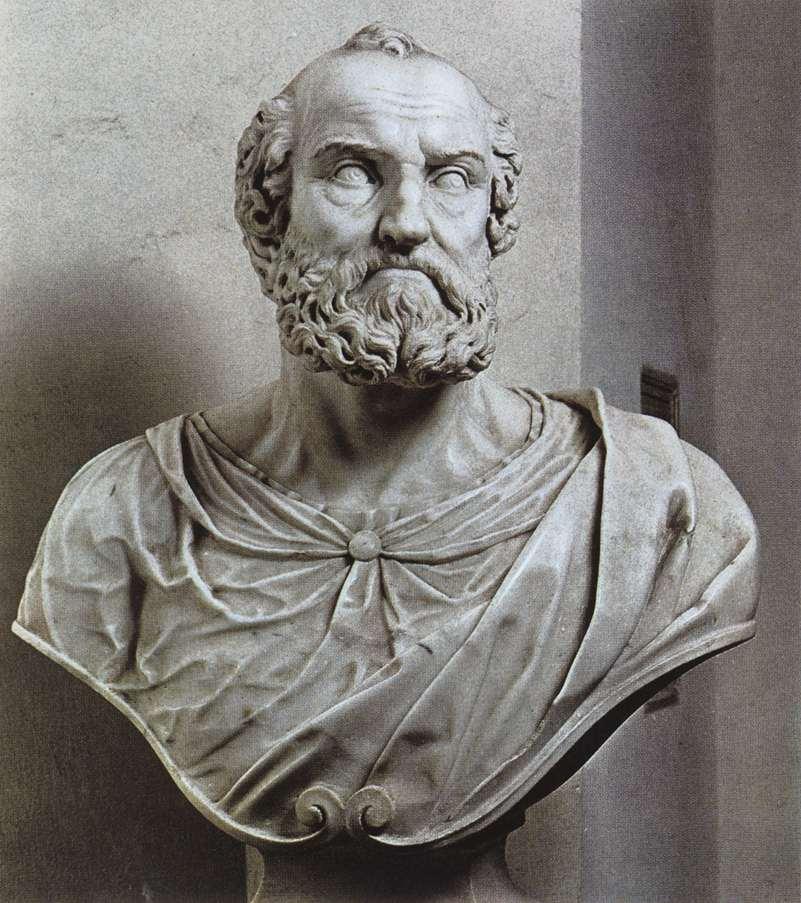
Saint Paul. Breviary of Martin of Aragon. Spain, Catalonia, 15th Century.
By whose preaching? Paul's... and the other apostles and those whom they have ordained to the task. Again and again through Paul's letters he refers to the special commission that the apostles have uniquely received, and which distinguishes them as authoritative both in teaching and in governing the Church. Paul's Church is not one in which one is a teacher or pastor simply because he feels the urge, or because his friends voted to approve him to the role. It's a matter of apostolic authority, and Paul is uncompromising on it. For him it's vital to preserving and proclaiming the full Gospel in a world in which there are so many distorted gospels and counterfeit teachers.

In this chapter, he reminds Titus that just as he, Paul, was "committed" the Gospel by the "commandment of God", so he has now appointed Titus to carry on this mission and to carefully appoint other men to share in this role through the ministries of priest ("presbyter") and bishop ("overseer").

Throughout these letters to Timothy and Titus, does Paul ever offer an alternative to this model of apostolic ministry?

Monday, June 27, 2005

2 Timothy 3: Dangerous times

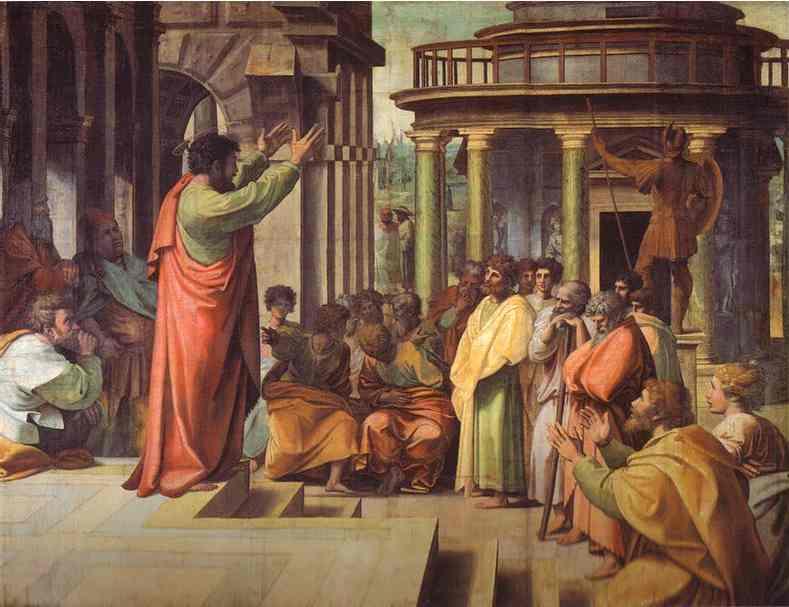
Raphael. Cartoon for St. Paul Preaching in Athens. c1513-1514. Mixed media on paper, mounted on canvas. Victoria and Albert Museum, London, UK.

2 Timothy Chapter 3 (RSV)
1 Know also this, that, in the last days, shall come dangerous times.
2 Men shall be lovers of themselves, covetous, haughty, proud, blasphemers, disobedient to parents, ungrateful, wicked,
3 Without affection, without peace, slanderers, incontinent, unmerciful, without kindness,
4 Traitors, stubborn, puffed up, and lovers of pleasures more than of God:
5 Having an appearance indeed of godliness, but denying the power thereof. Now these avoid.
6 For of these sort are they who creep into houses, and lead captive silly women laden with sins, who are led away with divers desires:
7 Ever learning, and never attaining to the knowledge of the truth.
8 Now as Jannes and Mambres resisted Moses, so these also resist the truth, men corrupted in mind, reprobate concerning the faith.
9 But they shall proceed no farther; for their folly shall be manifest to all men, as theirs also was.
10 But thou hast fully known my doctrine, manner of life, purpose, faith, longsuffering, love, patience,
11 Persecutions, afflictions: such as came upon me at Antioch, at Iconium, and at Lystra: what persecutions I endured, and out of them all the Lord delivered me.
12 And all that will live godly in Christ Jesus, shall suffer persecution.
13 But evil men and seducers shall grow worse and worse: erring, and driving into error.
14 But continue thou in those things which thou hast learned, and which have been committed to thee: knowing of whom thou hast learned them;
15 And because from thy infancy thou hast known the holy scriptures, which can instruct thee to salvation, by the faith which is in Christ Jesus.
16 All scripture, inspired of God, is profitable to teach, to reprove, to correct, to instruct in justice,
17 That the man of God may be perfect, furnished to every good work.


Throughout this epistle Paul has passionately urged Timothy to preserve and transmit "the gospel which thou hast heard of me in faith" (2 Timothy 1:13). He calls it, "my gospel" (2 Timothy 2:8). He does not mean that he owns it, but he means to distinguish the gospel which he has received and transmitted to Timothy, from the many other false gospels being spread by false teachers.

Now Paul tells us something about these false teachers. He characterizes them not so much by their erroneous doctrine as by their unseen, disordered passions and sinful lives. They perhaps present an "appearance... of godliness" but deny its power (2 Timothy 3:5). What does this mean? Paul explains.

He compares them to Jannes and Mambres, whose names Paul knows not from Scripture -they are named nowhere else in the Bible- but by oral tradition. These men were Pharoah's magicians, who when confronted with Moses, God's appointed messenger, resisted him and his message. When Moses displayed God's power through his staff turned serpent, Jannes and Mambres likewise produced serpents from staffs. Whether their sign was a clever magician's trick or was brought about by demonic power, the purpose of their counterfeit sign was to discredit Moses and deny the truth of his testimony. Even though Moses' serpent devoured the others, the magicians' efforts contributed to the hardening of Pharoah's heart as well as their own.

Similarly, the false teachers of whom Paul warns Timothy produce a false sign -the appearance of godliness- to conceal the reality that they are not sent by God and do not bear His message. Their "appearance of godliness" -a sham holiness and supposed knowledge of spiritual things- is skin deep, for their lives contradict the truth that God truly gives the power to turn from sin and grow in holiness. These false teachers do not believe or wish to believe that such transformation is possible or necessary.

From the first centuries of Christianity, some heretics promoted the error that only the soul is good, and all matter is evil; therefore, they taught, we should expect the body to desire and to naturally carry out evil acts, and that temptations to such sins can be irresistible. If they are irresistible, we aren't culpable for giving in to them. These heretics taught that if the body is evil, it is futile to try to make it behave virtuously. In the end, they held that salvation for Christians is salvation of the spirit, and the body can be permitted to run its course of sin.

Paul seems to be addressing just this sort of error. He identifies "silly women laden with sins" (2 Timothy 3:6) as particularly vulnerable to the lie that we can not resist temptations to sin. Women -then, just as now in many places- are too often victimized by men seeking conquest and sexual gratification without cost or consequence. The false teachers condemned by Paul in this chapter perhaps included some who were spreading a false message as a means for taking advantage of women in a particularly demeaning way: their victims would be left with an increased burden of guilt from which they would feel powerless to be freed. For them, the Gospel has been emptied of its power to bring about godliness.

In contrast, Paul's gospel is one of salvation for the whole person, body and soul, and a life transformed by the Gospel is one illuminated by holiness and virtue.

2 Timothy 3: Finding the Gospel, the Bible way

Here are two different ways to find someone sent by God to definitively preach the Gospel: which is the Bible way?

Method 1:
Seek out a preacher whose message about Christ sounds right, and appears to agree with Scripture. If so, observe his life to determine whether his example agrees with his teaching. If so, acknowlege him as a man of God and an authentic teacher of God's Word.

Method 2:
Seek out a person who has received the gift of the imposition of hands -like Timothy- from one who himself has received this apostolic gift -like Paul. Embrace his teachings unless they appear to contradict what the Church and Scripture clearly teach.

...

Method 1 is essentially a Protestant approach. It relies on me -with the help of the Holy Spirit- determining whether a given preacher is teaching and living the truth, in which case I will decide to believe what he says. If at some point his message doesn't sound quite right or his life doesn't look quite right, I'll have to reconsider.

Method 2 is essentially a Catholic approach. It relies on the scriptural fact that Jesus gave His apostles the power to preach the Gospel and through the imposition of hands to pass on that ministry to others, who are also able to do the same. Therefore, God sends us teachers who have been publicly set aside for that ministry according to the clear pattern set down in the Gospel and followed continuously since the first century. If such a man then teaches things that seem to contradict what Scripture and the Church teach, then I have to be careful not to be deceived by his potentially false teachings. If his life contadicts his teachings, then again I have cause for caution.

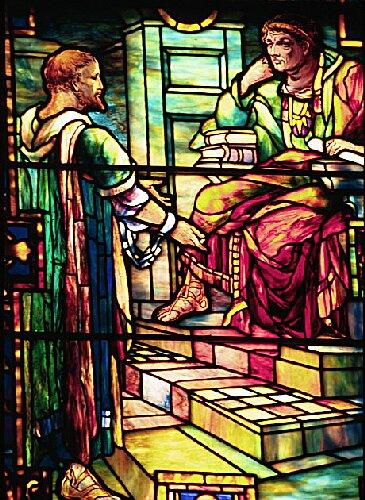
Paul before Agrippa.  Tiffany Studios.  Union Congregational Church, Montclair, NJ.
Note that the two methods are rather different. Method 1 requires me to build a case FOR a preacher in order to decide whether, in effect, his message is good enough to be believed.

Method 2 more exemplifies the belief that Jesus makes His appointed teachers readily recognizable, just as He did in the first century, and they are to be welcomed with respect and trust. We recognize them the way early Christians were to recognize the teachers sent to them: they were sent by the apostles or those sent by the apostles. At the same time, we must recognize that individual teachers can teach error, and their words must be weighed against the teachings handed down by the apostles through Scripture and Tradition.

These legitimately ordained teachers teach with true authority as long as they continue to teach in union with the successors of Peter and the other apostles.

Monday, June 20, 2005

2 Timothy 3: sacred Scripture and sacred Tradition

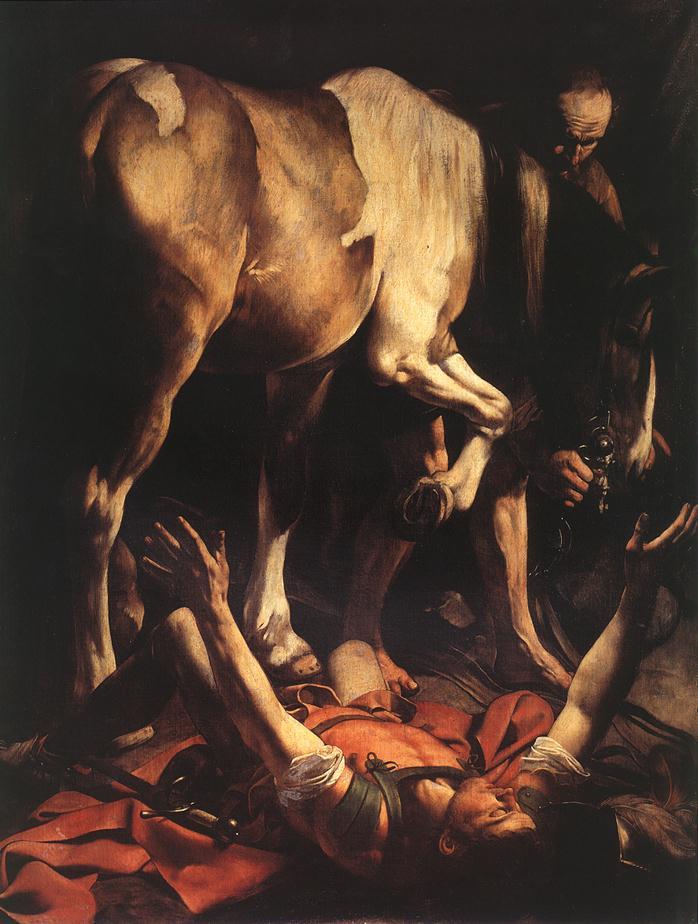
The Conversion of St. Paul.  Carravaggio, 1600. Oil on cypress wood, 237 x 189 cm.  Odescalchi Balbi Collection, Rome.

Paul wrote to Timothy:

14 But continue thou in those things which thou hast learned, and which have been committed to thee: knowing of whom thou hast learned them;
15 And because from thy infancy thou hast known the holy scriptures, which can instruct thee to salvation, by the faith which is in Christ Jesus.
16 All scripture, inspired of God, is profitable to teach, to reprove, to correct, to instruct in justice,
17 That the man of God may be perfect, furnished to every good work.


This passage offers a clear view of Paul's concept of how the Gospel is transmitted: by Scripture and apostolic preaching.

Verse 14 urges Timothy to hold fast to the teachings which have been "committed" to him. On what basis? Because Timothy knows that Paul, the messenger of those teachings, is an apostle. Timothy is to "continue" in these things not because they sound good or seem plausible, but because Paul expects Timothy to recognize Paul's position as an apostle and therefore one who speaks definitively with teaching authority received from Jesus.

Verses 15-17 affirm the divine inspiration and value of Scripture in providing instruction profitable in achieving salvation. But these verses were written in the same breath, so to speak, as verse 14, and so rightly coexist with a harmonious meaning.

Paul never taught that oral tradition made Scripture unnecessary, nor did he teach the opposite. Rather, as the whole passage makes clear, Timothy is exhorted to respect and live by all the apostolic teachings he has received, whether they have been communicated to him via sacred Scripture or by authoritative apostolic preaching.

2 Timothy 2: Five generations of apostolic tradition!

Paul exhorts Timothy,

1 Thou therefore, my son, be strong in the grace which is in Christ Jesus:
2 And the things which thou hast heard of me by many witnesses, the same commend to faithful men, who shall be fit to teach others also.

Let's unpack that verse 2...
-Paul spoke certain things to "many witnesses";
-these witnesses delivered these things to Timothy;
-Timothy is to commend these things to "faithful men";
-These men are to teach others.

Count 'em... that's five links in a chain, an unbroken chain by which the Gospel is transmitted from apostle to the far reaches of the Church via those appointed to teach.

We've already seen in the book of Acts how, after he was called by Jesus, Paul was visibly appointed to the office of apostle through the imposition of hands. And we have seen Paul speak of how he appointed Timothy to a similar role -also through the imposition of hands.

Now we see the bigger picture. Paul and the other apostles can't preach the Gospel to the whole world alone. They recognize that they have received a divine commission and have teaching authority, but they also recognize that they have the power to appoint other men to share in this same office. Timothy has received this office and ministry through the imposition of hands, as have so many others before and after him.

Tuesday, May 17, 2005

1 Timothy 3: Why can't Catholic bishops marry?

Today the question was asked, "Paul clearly permitted married men to become bishops, but the Catholic Church doesn't let married men become bishops. Doesn't Catholic practice on this point contradict Scripture?" Excellent question.

It's important to recognize that scripture distinguishes between doctrine and church practice or "discipline". Doctrine -official teaching about matters of faith and morals- can't change because divine truth doesn't change. What's true is true. Church discipline, on the other hand, is a separate matter. It refers to how the Church maintains order and carries out its mission.

Without going into the history of why the Church later adopted the rule of celibacy for bishops, the fact remains that the Church regards this not as a doctrine but simply as a matter of discipline, and has kept the rule in place for many centuries because she judges it to be a worthy and wise practice, one which has yielded great blessings for the Church. You and I may agree or disagree with the wisdom of the rule, but that's hardly relevant. The point is the Church has the authority to govern itself in matters of practice for the sake of the good of its members, and it has this authority from Christ.

Now, as circumstances change, the best way to maintain order and promote the good can likewise change. Someday, the Pope conceivably could cancel the rule of celibacy for bishops. The New Testament shows numerous of examples of the Church developing disciplines, and we don't have to look far for one. In our meeting today, there was some disagreement over this simple fact.

Yet just a few verses earlier Paul wrote,


"women should adorn themselves modestly and sensibly in seemly apparel, not with braided hair or gold or pearls or costly attire 10 but by good deeds, as befits women who profess religion. 11 Let a woman learn in silence with all submissiveness. 12 I permit no woman to teach or to have authority over men; she is to keep silent." 1 Timothy 2:9-12 RSV

If we are to maintain that sort of teaching in the New Testament is a matter of unchangeable doctrine, how are we to interpret this passage? One must conclude that today women are obliged to remove braids from their hair, gold jewelry from their bodies, and must learn in silence from their husbands -no matter how ignorant of the faith their husbands may be! What's more, nowhere in the New Testament are these rules cancelled.

The Catholic Church does not teach that these rules about women are matters of unchangeable doctrine, so I'm free to believe that they were temporary rules which Paul imposed for a unique set of circumstances in a local church, circumstances which do not apply everywhere today. But I'm deeply curious about how some of my Protestant brothers and sisters can justify setting aside Paul's restrictions on women if they do not acknowlege the Church's power to interpret Scripture, discern discipline from doctrine, and make temporary rules to address temporary situations.

Monday, May 16, 2005

1 Timothy 3: What is the "pillar and bullwark of truth"?

My Protestant brothers and sisters rightly have a great love for Scripture and revere it as the Word of God. But if, as many of them claim, Scripture and Scripture alone is to be our sole rule of faith, then why doesn't Scripture anywhere say so?

Does Paul say that the "pillar and bullwark of truth" is Scripture? No. He describes "the church of the living God" as "the pillar and bullwark of truth" (1 Timothy 3:15 RSV)

Does this place the Church above Scripture? No, but it places the Church and Scripture in proper perspective. Elsewhere Paul says, "So then, brethren, stand firm and hold to the traditions which you were taught by us, either by word of mouth or by letter." (2 Thessalonians 2:15 RSV)

Paul's perspective -the Bible perspective- is that we have received the Gospel through men appointed by God, and their message has been transmitted to us by both written and oral means. The message is not authoritative simply because it is written down, but because it is of apostolic authority. When Paul and the other apostles speak, their spoken words weigh as much as when they write.

The Gospel and the whole message of Christ are transmitted to us not exclusively by the written word, but through the living Church in virtue of apostolic authority, through the laying on of hands.

The Church had this apostolic foundation and leadership in the first century, because Jesus founded it that way. It needs and continues to enjoy that same foundation today, because truth is ever under attack and man is ever in need of a visible teacher, sent by God, whose authority comes from God through the apostles.